On the “Iron Laws of the World”

Two Schools of Leadership

In my final duty assignment in the U.S. Army, I served as the Brigade Adjutant (S-1) of the 94th Air Defense Brigade while stationed in Kaiserslautern, Germany. In that role, I was responsible for personnel and human resources matters across the brigade, which at the time consisted of roughly 1,500 soldiers spread across two core battalions and a few separate units.

The Adjutant’s role provided a perspective that few positions do. I worked closely with each battalion commander and their staffs, saw how decisions at the top echoed through their respective organizations, and observed how leadership styles shaped units over time—not just during major training events and exercises, but in the daily, unglamorous work of sustaining readiness and morale.

From that vantage point, I began to notice a pattern. The commanders I observed differed in temperament, background, and ability, but their approaches to leadership often fell into one of two distinct schools. These differences were not immediately obvious in performance metrics. In fact, some of the most striking contrasts only became clear when looking beyond awards, competitions, or short-term outcomes.

Over time, as I gained experience in the business world and local government, I came to believe that these two schools of leadership exist not only in the military, but across public life more broadly. They are not defined by competence or intent, and certainly not by whether leaders care about winning. They are defined by something more fundamental: how leaders understand power, how they use it, and what they believe it costs.


The Leadership of Extraction

The first kind of leader views people as finite resources. In this view, every individual has a relatively fixed ceiling of performance, and the leader’s job is to push subordinates as close to that ceiling as possible—by motivation if possible, by pressure if necessary.

Winning matters. Metrics matter. Evaluations, inspections, and awards matter. These leaders are often very good at producing visible success (real or manufactured), and as a result they are frequently rewarded by higher command.

But there is a cost.

In these organizations, people are implicitly treated as commodities. Attrition is assumed. Rotation, replacement, or burnout are not failures of leadership; they are simply part of the system. Morale in these units can be paradoxical. On the surface, morale may appear high—units perform well, standards are enforced, and accomplishments are real. But beneath that surface there is often a culture of fear.

Soldiers in these organizations will go far for their commander, but not primarily out of loyalty. They do so because the consequences of failure are clear and often personal. Initiative narrows. Risk-taking becomes dangerous. Problems are hidden rather than surfaced. The saving grace, for many, is that the assignment is finite. If one keeps their head down long enough, the tour will end.

From the outside, these units often look excellent. From the inside, they feel brittle.

Over time, I came to believe that this style of leadership has a ceiling. It can drive performance up quickly, but it cannot sustain growth indefinitely. It extracts effort, but it does not compound it.


The Leadership of Cultivation

The second kind of leader sees people not as finite resources, but as human beings with unknown potential. In this view, performance is not capped in advance. Individuals may perform below expectations—or far beyond them—depending on the environment in which they are placed.

These leaders are relational. Fairness matters deeply to them. Empathy is not weakness; it is a tool for understanding what people need in order to do their best work. Accountability still exists, often strongly so, but it is perceived as legitimate.

In these units, progress is often slower at first. They may not win every competition. They may place second or third where other units place first. To an impatient observer, they can look merely “good” rather than exceptional.

But over time, something different emerges.

People in these organizations take ownership. They speak honestly upward. They protect the leader’s intent, not just his or her orders. They do things they did not believe they were capable of doing. Loyalty is not extracted; it is given freely, rooted in mutual respect.

What struck me most was the depth of these organizations. They had a steadiness that did not depend on constant pressure from above. I found myself thinking that their potential was not merely higher, but fundamentally less bounded. Where fear-based units had a ceiling, these units felt capable of compounding strength over time.


Power, Capital, and the Limits of Force

I still think about those two battalion commanders and what distinguished them. Both were effective in their own way. Both met expectations. But only one led in a way that felt sustainable—capable of enduring stress, uncertainty, and time.

The difference was not ambition or discipline. It was how power was understood.

Recently, a senior political figure stated that the “iron rules of the world” are that the “real world” is governed by strength, force, and power. There is a certain blunt clarity to this view, and it resonates because power does matter. Leaders who deny that reality are often unprepared for the world as it is.

But this view is incomplete.

What it misses is that power is not a self-renewing resource. It is more like capital. Every time it is exercised, something is spent.

In the military, this is understood intuitively, even if it is not always stated explicitly. Authority can compel compliance, but each use of coercion draws down reserves of trust, initiative, and legitimacy. Orders may be followed, but over time people stop thinking, stop volunteering information, and stop taking responsibility beyond what is strictly required. Performance becomes narrower and more fragile.

This distinction is not confined to battalions or bases. It appears repeatedly across history—in governments that rule by force until legitimacy collapses, in corporations where fear produces short-term results and long-term dysfunction, and in organizations crippled by micromanagement masquerading as control. The settings differ, but the pattern is consistent.

Leaders who see power as self-justifying tend to escalate. Each use of force consumes the very conditions that made authority possible in the first place. Over time, they narrow their own options, harden the systems they lead, and create an ever-growing dependence on coercion. What begins as strength can quietly become fragility.

Leaders who understand power as capital behave differently. They are selective rather than impulsive, patient rather than performative, and oriented toward the long horizon rather than the next demonstration of strength. They ask not only whether power can be used, but what its use will cost—tomorrow, next year, and after they are gone.

This is the part missing from strength-only theories of leadership. If the world were governed only by force, then the constant exercise of power would be sufficient. But in reality, constant force requires constant replenishment of political, institutional, or moral capital. Leaders who rely on power alone must continually accumulate more of it just to maintain their position. The appetite becomes unending.

In government, as in the military, this dynamic has consequences. Frequent elections, short-term incentives, and public displays of dominance encourage leaders to spend capital aggressively for immediate results. The bill comes later—often paid by institutions, norms, and people who had no hand in the original decisions.

The irony is that the leaders who speak most insistently about strength often create the most fragile systems. By contrast, leaders who understand power as something to be husbanded, not flaunted, tend to build organizations—and societies—that can absorb shock, adapt, and endure.

Power is real. Strength matters. But experience suggests a harder truth than the “iron laws” allow: leadership that treats power as inexhaustible eventually exhausts the environment that sustains it.
The Right Way

I’ve been a M*A*S*H fan since childhood. Although it’s a comedy sitcom, I’ve always found nuggets of wisdom in it, including excellent leadership lessons.

In one episode, Col. Potter remarks — “Just remember, there’s a right way and a wrong way to do everything and the wrong way is to keep trying to make everybody else do it the right way.”

I’ve thought about this quote extensively and how it has such broad application to so many different contexts. In the context of my professional life as a technology leader, I’ve thought about the quote and how it applies to project success.

Project management is as much a soft art as it is the application of hard skills. The textbook skills can be taught, but there are skills that are more nuanced and require being able to read people, the organization as a whole and reading the dynamics between people. These are skills that can only be learned through experience. As much as every project has similar characteristics, there’s almost always differences that matter and keep project management from being cookie-cutter.

This brings me to the main point of this post. A lesson I’ve learned over the years, one learned from my days of serving in the military, is that intent focus on the mission and having a clear definition of the desired outcome is far more important to getting everyone to “do it the right way.” Process and structure are very important, but having structure and process should not become the overriding purpose of the project.

Often, project managers, in demonstrating their skills, focus too intently on following and getting everyone else to follow the more rigid aspects of project management. A project can be a deemed a success because all the steps that go into traditional project management were executed to a “T,” but that doesn’t necessarily mean the project is a success in achieving the desired outcome.

Knowing and understanding the objective is vital. I witnessed this on a recent project where the definition of “success” was not well understood, even though there was a solid project charter. Moreover, sometimes the objective can change over time, or different people may develop different ideas about the meaning of “success” of the project.

This is where a project manager really earns her keep — by working with leadership and stakeholders to constantly and consistently clarify and reinforce the mission and to adjust it when necessary, then communicating it back broadly and regularly. This is a more nuanced aspect of project management.

As a follow-up to this post, I’ll be writing about the five paragraph operations order used in the military and how it relates to project management in the technology world.

In the Trenches

Among the many important lessons I’ve learned in life is to lead by example. Leading by example fosters common bonds.

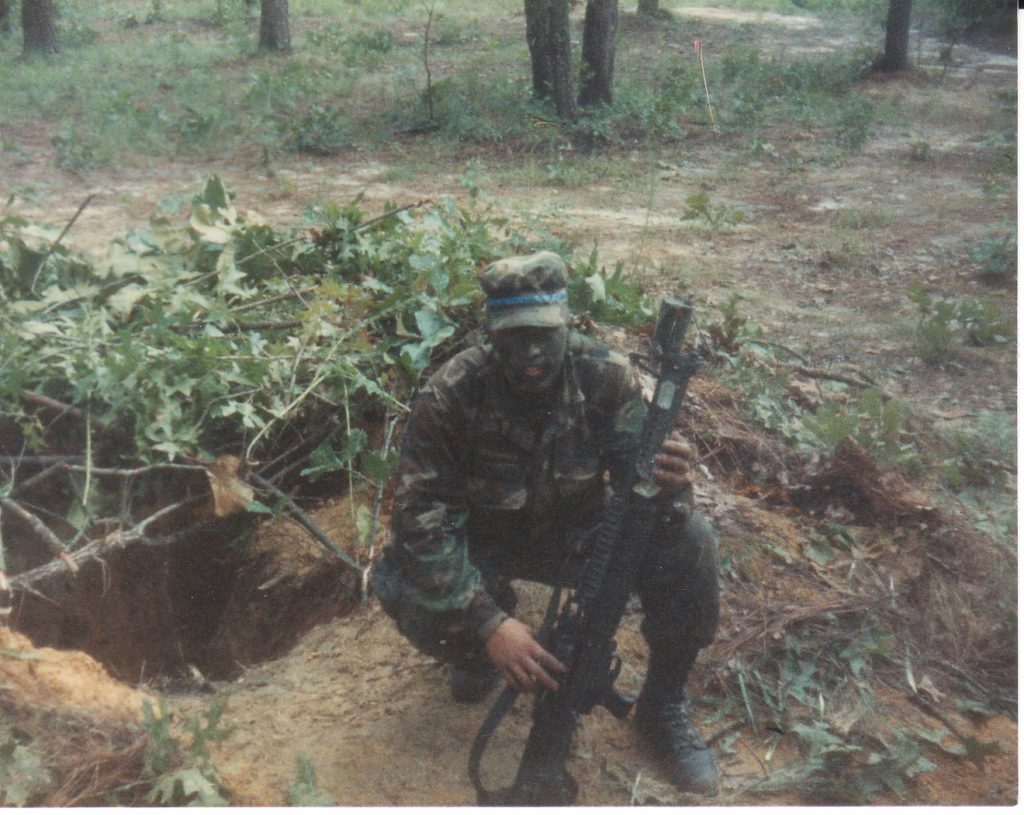
In 1989, I spent part of the summer at Fort Bragg, NC for officer basic training as part of the University of New Hampshire’s R.O.T.C. training program. While on a field exercise, our non-commissioned officer trainer had us dig in for the night.

I remember giving him an attitude, questioning why he was having us dig foxholes when it was something we were never going to do as officers. His simple response was something to the effect of – “sir, because if you don’t dig foxholes, your soldiers never will.” I complied though at the time I don’t think I entirely bought into his argument.

Although I didn’t immediately appreciate the depth of the wisdom I had just received, I later came to realize that his words sunk in deeply. Since that time, in everything I do, I do my best to lead by example because I know being in the trenches together can actually bring people together toward a common purpose.

Fort Bragg, circa 1989

Fast forward to 2022

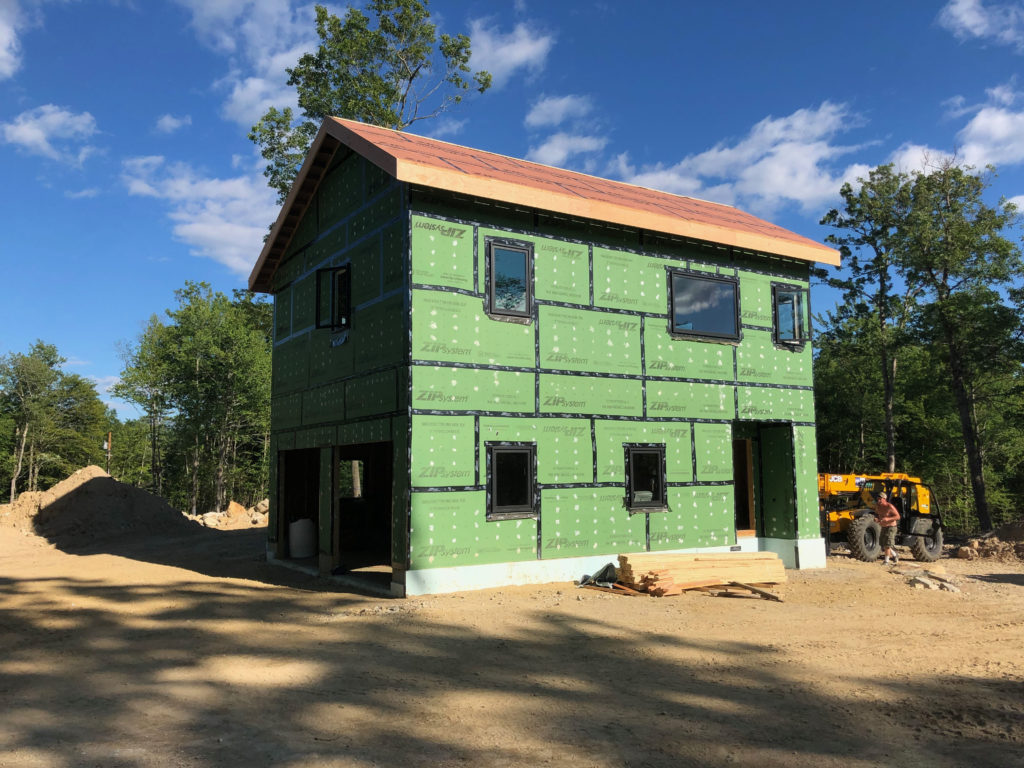
I’m in the midst of building a small house for myself. I decided to be my own general contractor, mainly because I’m on a budget, but also because I wanted to have a direct role in the construction. Construction started in December 2021. We are soon to start with the interior work. Among the many lessons I’ve learned about construction, I’ve learned that there’s a great deal of trust involved in working with contractors to build a home.

New Durham, NH, circa June 2022

My political beliefs are likely different from those of the guys with whom I’m working. We don’t talk about politics, but it’s not difficult to figure it out. As of late, talk about gas prices and how it affects contractors reveals a lot about one’s politics. Still, with only a few exceptions, I’ve been able to establish good relationships with the contractors doing the work.

I’m confident that my experience building a house would be dramatically different if I were the kind of person who sat back and waited for the work to be done and only made periodic visits to the job site. Instead, I’m out there everyday there’s work being done. I help where I can and am available for instant decision making.

I do this not only because building the house is a substantial investment, but also because I recognize that as both the homeowner and the general contractor, I’m in a leadership role and that the basics of leadership are just as necessary on the construction site as they are at Fort Bragg.

What I’ve learned, or rather, what’s been reinforced, is that people can be good to each other and work together, even when their politics don’t align. Friendships can even form. It’s the same experience I had in the military. People from all walks of life serve in the military. Sometimes, you don’t know how much you have in common with another person until you’re in the trenches together.

Take from this post what you will. If you have any interest whatsoever to find a common purpose and common values, look for opportunities to be in the trenches together with people who are different. It could be volunteering at a local event. It could be helping a neighbor. It could be anything.

On Heroes

In 2007, I wrote the dedication below to my grandfather, my hero, and read it at his funeral in January of that year. It’s about my grandfather, but also about heroes in general and why even when heroes make mistakes that they are still heroic. I pulled it out of my files on the occasion of Secretary and General Colin Powell’s passing because of the attention paid to the blot on General Powell’s otherwise impeccable record. General Powell was nearly as much of a hero for me as my grandfather. He had a deep impact on me in my formative years as a young U.S. Army officer.

In my personal and professional lives, I have tried to follow General Powell’s thirteen rules of leadership. Like General Powell, the military was a place where I found structure and purpose and where class and wealth did no matter. As I have since my grandfather’s passing, I feel a duty to continue honoring the spirt and lessons of my two greatest heroes in life.


January 22, 2007

            Nearly 17 years ago, I wore this same uniform as I embarked on a rewarding chapter of my life in the U.S. Army.  On that day in May of 1990 at Zais Hall, my grandfather honored me by administering the oath that officially brought me into the ranks of the officer corps.  It was a proud moment for both of us.  He hadn’t put on the uniform in many years and was relieved and excited to find that it still fit.  I’m having that same experience today – it’s been 11 years.  That ceremony in 1990 was one of only two times I ever witnessed my grandfather crying.  I stand here today to honor him as he did me that windy day at UNH.

            It will come as no surprise to many of you when I say that my grandfather is my hero.  I’ve wanted to be like him for as long as I can remember.  Just before coming to New Hampshire on this solemn occasion, I re-read a school paper I wrote my freshman year at UNH.  It very clearly [and emphatically] stated my desire to be just like him.  Reading it made me cry because it was a reminder that the notion of wanting to be just like my granddad wasn’t some idea I had cooked up in adulthood.  In several ways, I have followed in my grandfather’s footsteps and my personality has been tremendously shaped by his influence.  I don’t recall that I ever told my grandfather that he was my hero, but I think he knew it.  Nothing has changed since those early days in New Castle.  What has changed over time is my definition of the word “hero”.

            As heroes usually are, my grandfather was larger than life; especially so when I was a young boy.  It’s hard for anyone to debate Douglas Woodward’s impressive resume of life experiences.  A jack of many trades and master of quite a few.  He was no intellectual slouch.  He was even, as he fondly liked to say of other old and crusty New Englanders … a little bit “salty”.  He had what is called in the study of leadership – “presence”.  Those I would meet in the seacoast area always had a high opinion of my grandfather.  He was above all else a man of honor and principles.  From him I learned – always do the right thing and don’t take shortcuts.  He occupied a higher plain from my young-eyed perspective.

            As I got older, I got to know the person.  I got to know the man.  I got to know that he was human and that he even had flaws.  That kind of information had to be processed against my image of him as the infallible hero.  It was a process that took several years as I got to know him better man to man.  In the end, my grandfather is still my hero.  He never stopped being my hero and he never stopped being anything other than himself.

            If you don’t have a hero in your life, then here’s some advice – it’s a 360 degree circular path to finding one and keeping him or her in hero status.  At zero degrees of the circle is the easy part … viewing your hero in the bubble of infallible greatness.  Enjoy that part for 179 degrees.  At 180 degrees of the circle is the hard part that may shake your desire to hold on to your hero – the realization that he or she is human like the rest of us.  You’ll stay there for another 179 degrees as you figure out what to do with the new understanding of your hero’s very human nature.  At 360 degrees your hero will be back on top.  By 360 degrees, you will find that your hero is even more heroic.  You will believe that your hero is as great now as he or she was at zero degrees, despite [and because of] the reality check that happened at 180.  I will miss my grandfather and I just wanted to tell you that he is my hero.  I hope each of you find one just like him.

Scott Woodward

Hope For A Senior Street Dog

Republished from the Hope 4 a Street Dog website.

The remarkable story of a senior dog in Costa Rica who needed a second chance, and a life-changing opportunity that a dog lover from Vermont made possible.

Meet Chino

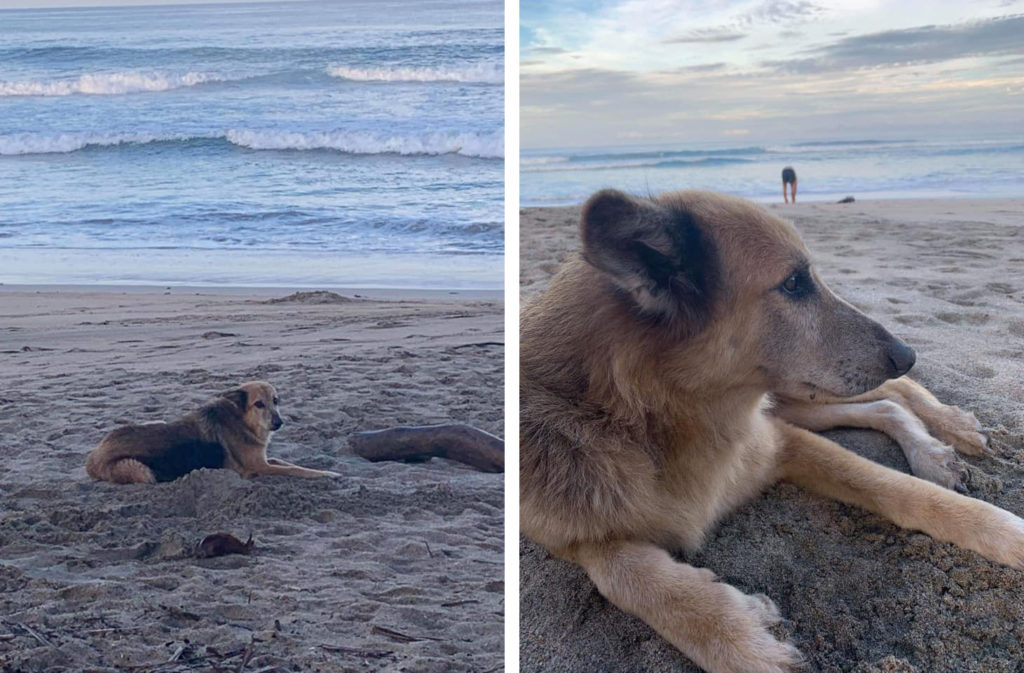
It’s rare here in Costa Rica to see a dog old enough to have silver hair coming in on their snout. Many dogs don’t get the chance to enjoy their golden years, and especially not street dogs. So when Chino was found begging for food on the beach at Playa Negra, with ticks and matted graying hair, we at Hope 4 A Street Dog were quite surprised.

When Chino was first found at Playa Negra

It’s uncertain how this became Chino’s reality. Unfortunately, dogs are abandoned all too often when they begin to age, even when they are as friendly and sweet as Chino. For true dog lovers this is an unthinkable act, but shelters around the world are full of senior animals who have been surrendered, usually because they require more care in their later years. 

The Road to Recovery

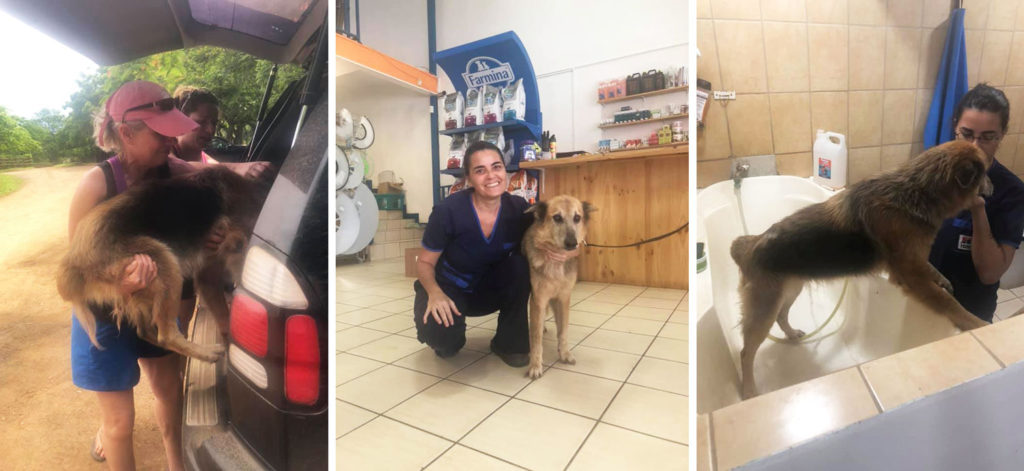
Chino was brought to Dr. Cavallini’s Veterinary office for a checkup and much-needed grooming, by two visiting volunteers, Bonnie and Mary. Sylvia, one of the best groomers in the area, worked her magic, bathing him and getting rid of all the knots and ticks. Chino left with a new lease on life; not only feeling fresh and clean, but loved and cared for like he should be.

Chino’s first checkup and bath

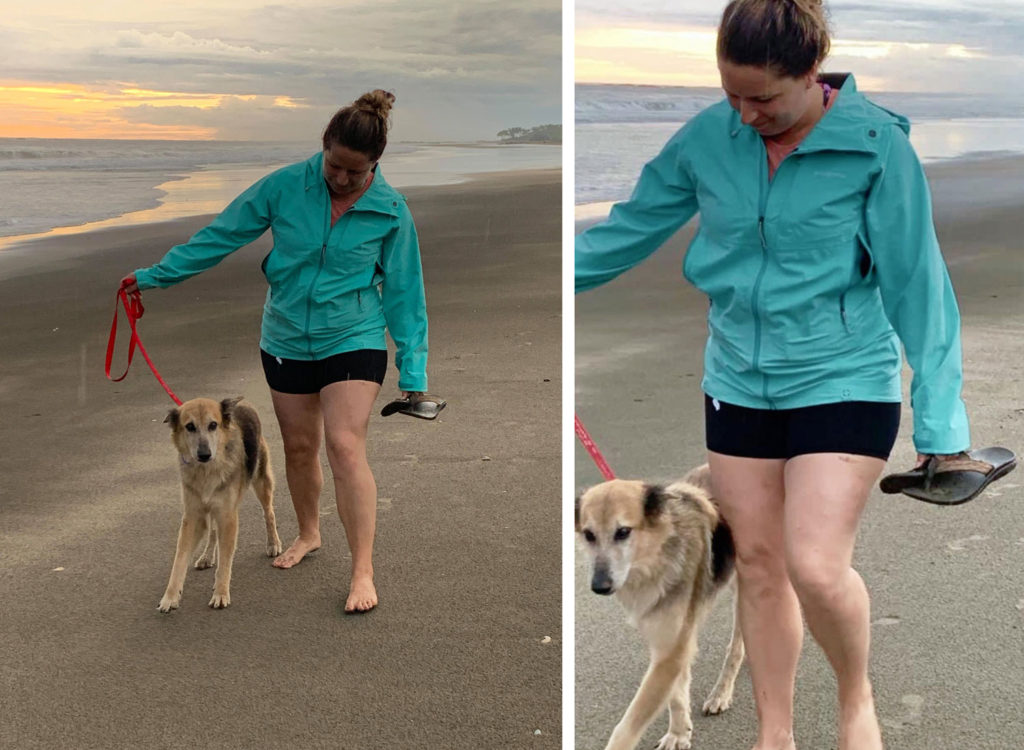
The vet estimated he was around 8 years old. He had some of the common ailments that dogs here in the tropics deal with, but nothing that couldn’t be treated. He was now safe and fed at Berta‘s sanctuary, spending his days with her pack of rescues and fosters. We began looking for a forever home for Chino, and while he waited he got lots of visits and walks on the beach from volunteers.

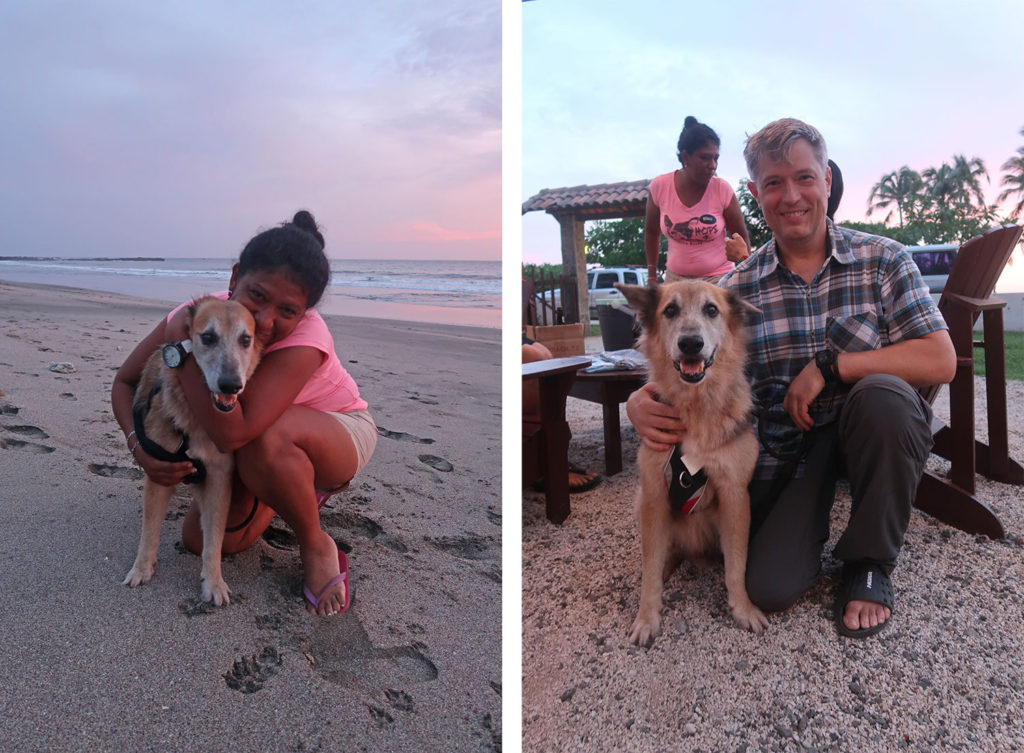
Enjoying a lovely Costa Rica beach walk

A Miracle from Vermont

Then, we received amazing news from Hope 4 A Street Dog’s founder, Kim in Vermont. She had found a volunteer who wanted to travel to Costa Rica to pick up Chino, and accompany him on a journey north to live in Vermont. This admirable dog-lover, Scott Woodward, had actually adopted a Costa Rican rescue from Kim already. Kim also runs a rescue in Vermont, and has helped many dogs transition from Costa Rica find their forever homes in the U.S. Scott fell in love with his Tico dog, Milu, and jumped at the opportunity to help another rescue from Costa Rica find a loving home when he heard Chino’s story.

Scott and his dog Milu, who is also a Costa Rican rescue

Aside from being a long time dog lover and supporter of rescue, Scott was searching for ways to bring deeper meaning and happiness into his life and others’. He decided it was time to start shifting focus and energy to other things aside from work, and forming connections that mattered. This trip to Costa Rica was about more than rescuing Chino, it was about connecting with other people who have a similar mission in life, and forming life-long friendships. Scott’s mission to live with purpose and spread love is something we can all learn from and be inspired by. 

When Scott landed at Liberia airport, Chino was there to greet him. He gave him a warm welcome, as if he knew they were going to be long time amigos. We immediately connected with Scott, and welcomed him to the land of pura vida, and to our community of animal lovers. We are so grateful to meet kind souls like Scott who help make miracles happen like this. We did our best to show Scott a good time here in Playa Junquillal, and he got to know the area and all of the volunteers at Hope 4 A Street Dog well. He and Chino even spent some time getting professional training with Shari from Tropic K9, so they would be ready for their trip to Vermont together. Thank you, Shari!

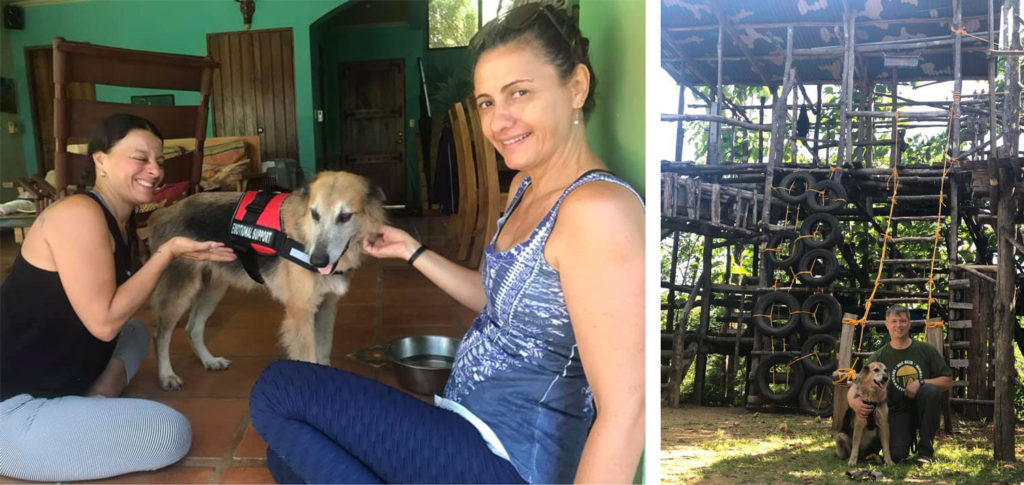
Volunteers, Jessica and Flavia helping Chino into his new vest. | Scott and Chino at Tropic K9

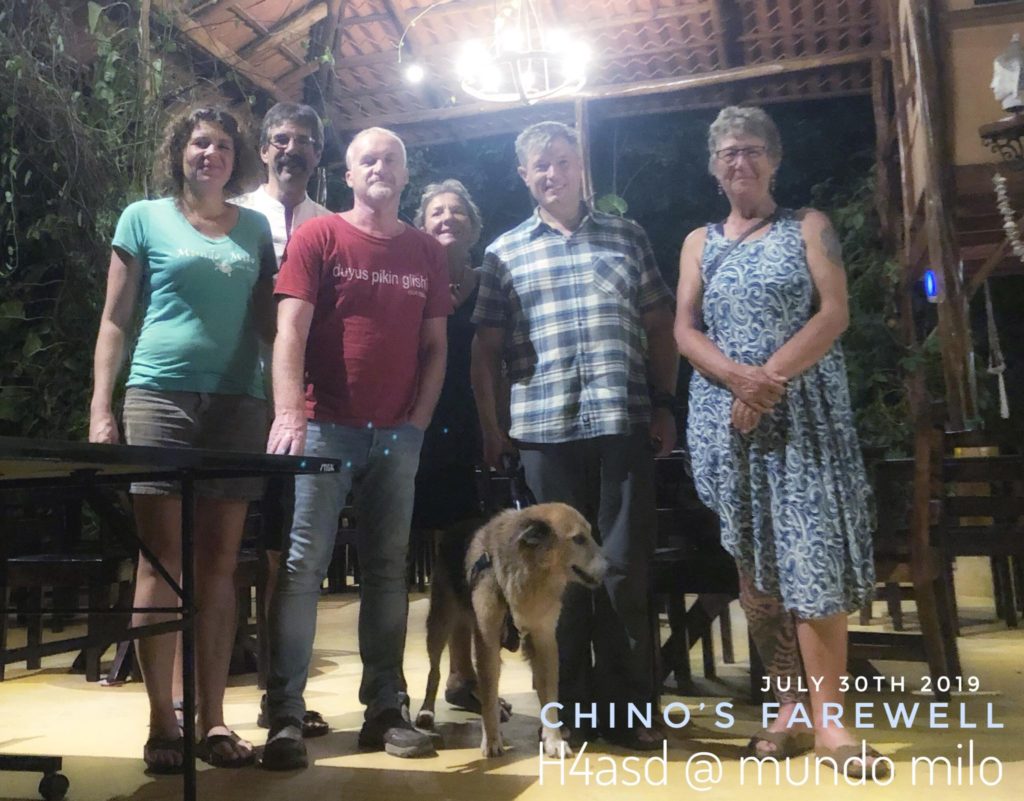
Scott’s time in Costa Rica went by fast, but he definitely packed in the memories. It’s safe to say this will probably not be Scott’s last time visiting, as we could tell that this beautiful place had captured his heart. We were so happy to see Chino and Scott forming a bond and so relieved that this senior dog was getting a second chance. We even had a farewell party for Chino before he left, to wish them well and thank Scott again for his unforgettable act of kindness.

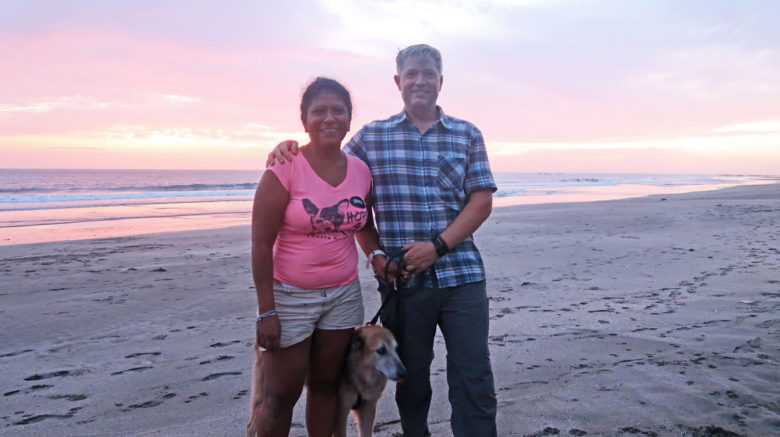
Berta, Scott and Chino at his farewell party!

¡Buen viaje, Chino y Scott!

After extending his trip for two extra days, it was finally time for Scott and Chino to fly back to Vermont. Berta was feeling especially torn, obviously happy that Chino would be in a loving home, but sad to say goodbye after caring for him all these months in foster care. This is a feeling she is used to after rescuing and finding homes for countless dogs over the years, but it never gets easier.

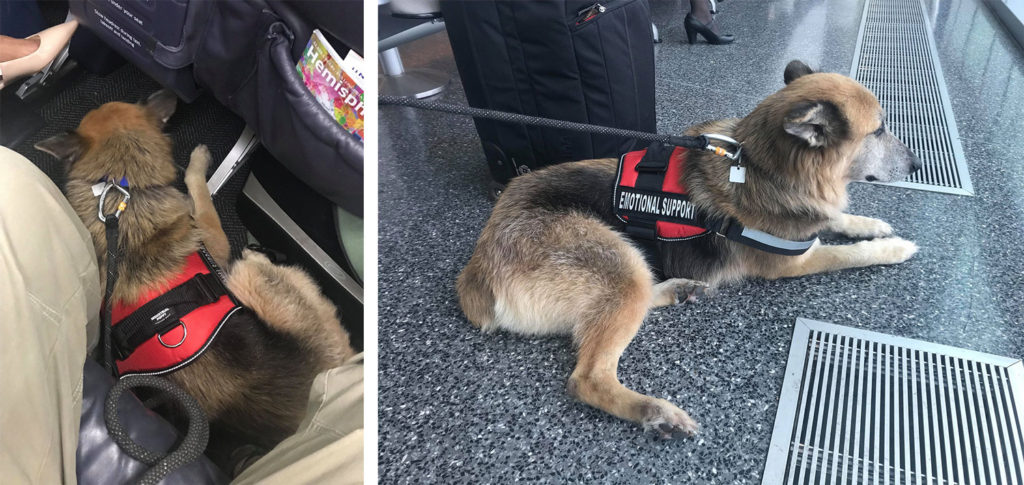
Their trip went smoothly and Chino was very well behaved. Scott couldn’t wait to introduce Chino to Milu when they arrived, and show him around his new home. 

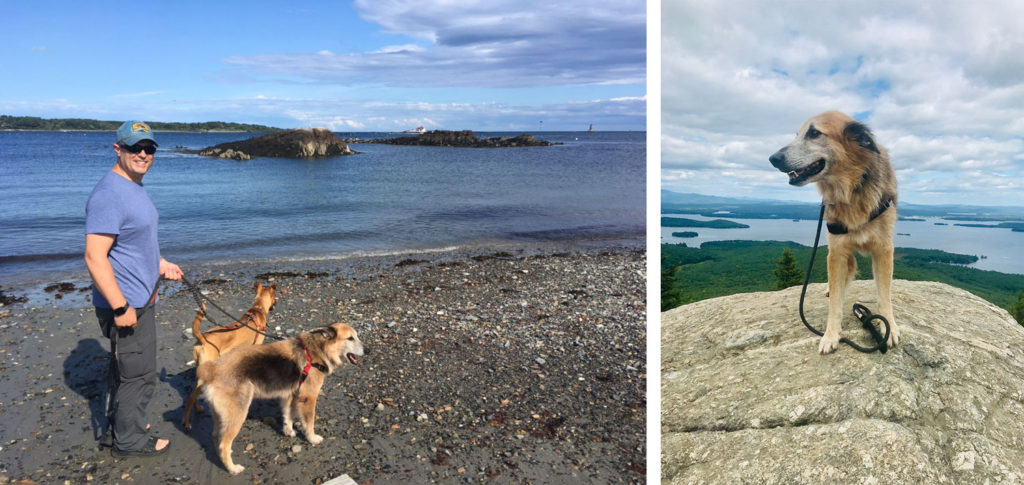
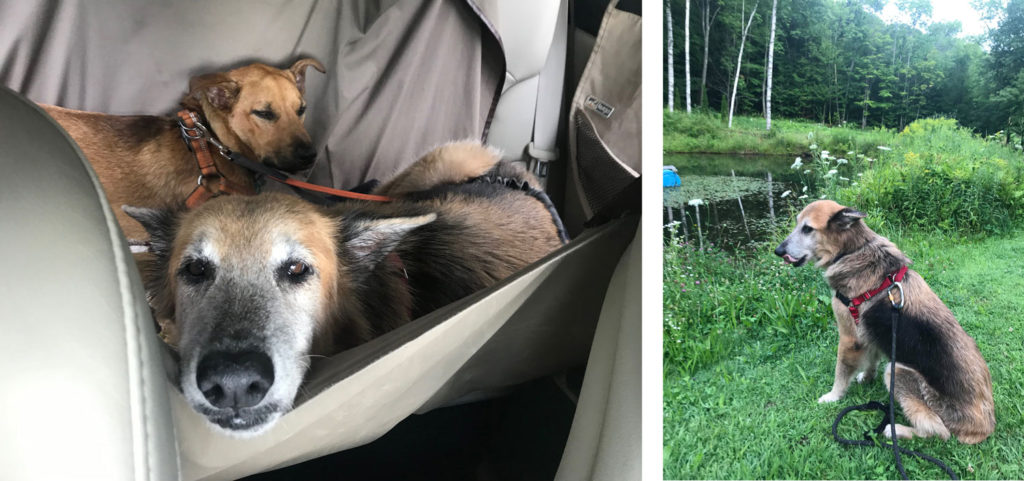
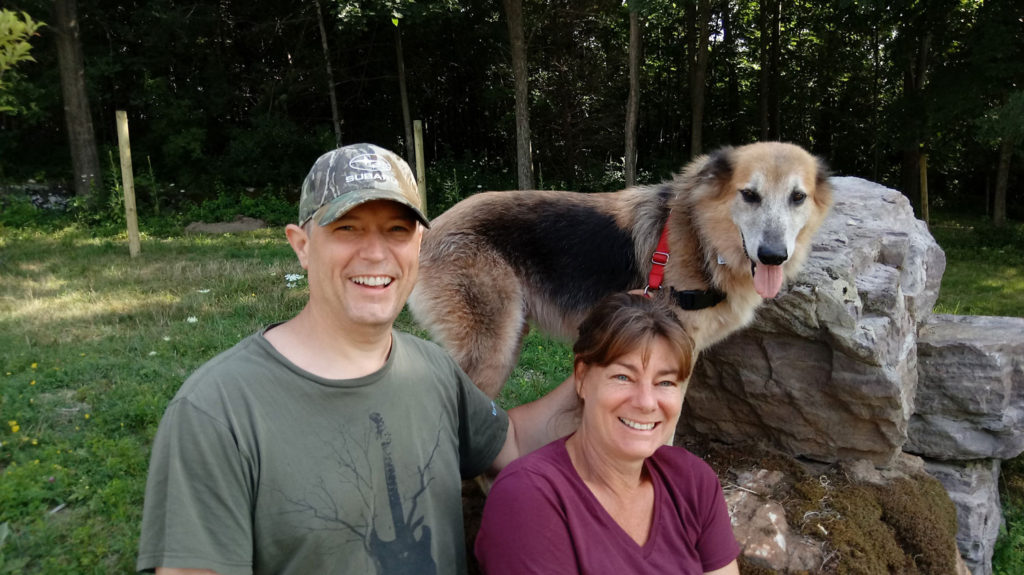
Now that Scott and Chino are settled in, he says that Milu accepted Chino as his new brother quickly, and they are enjoying the Vermont summer and spending lots of time outdoors hiking and exploring. Scott was originally just supposed to foster Chino until he was adopted, but we have a feeling Chino has already found his forever home!

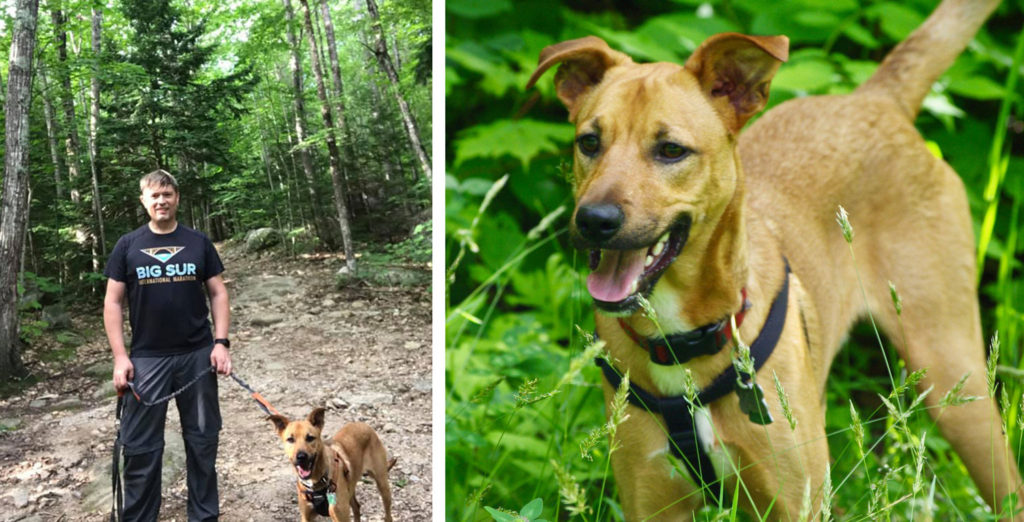
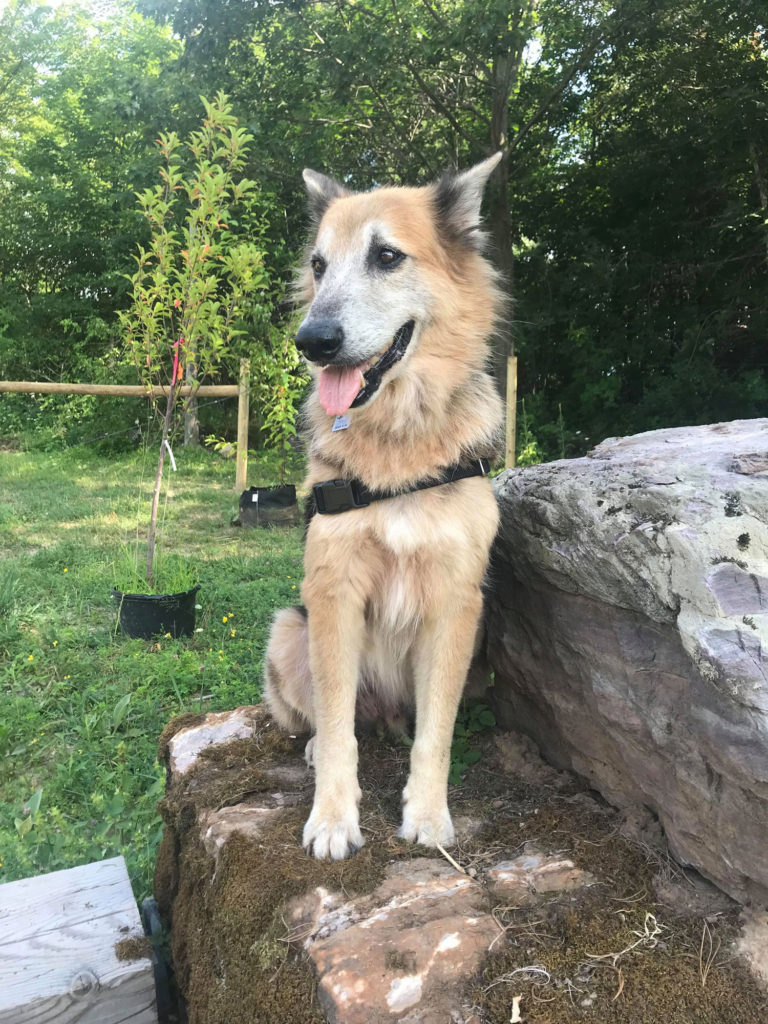
Chino in New Hampshire enjoying the outdoors with Scott and Milu
Can you believe these two just met??

We Are All Hope

We are so glad that there IS hope for a senior street dog, and we want to remind you that we are ALL hope for every dog in need. This community of animal lovers continues to grow and we are endlessly surprised and warmed by new contributors like Scott to our cause. None of these heartwarming stories could be possible without the help of so many. This story is the perfect example of how it truly takes a village to give hope to a being that needed help, and so easily could have been overlooked. Thank you to EVERYONE who helped Chino and believed in him. And an extra special thanks to you, Scott.

Scott and Chino with Kim, founder of Hope 4 A Street Dog and Long Trail Canine Rescue
From Costa Rica to Vermont. Hope 4 A SENIOR Street Dog